
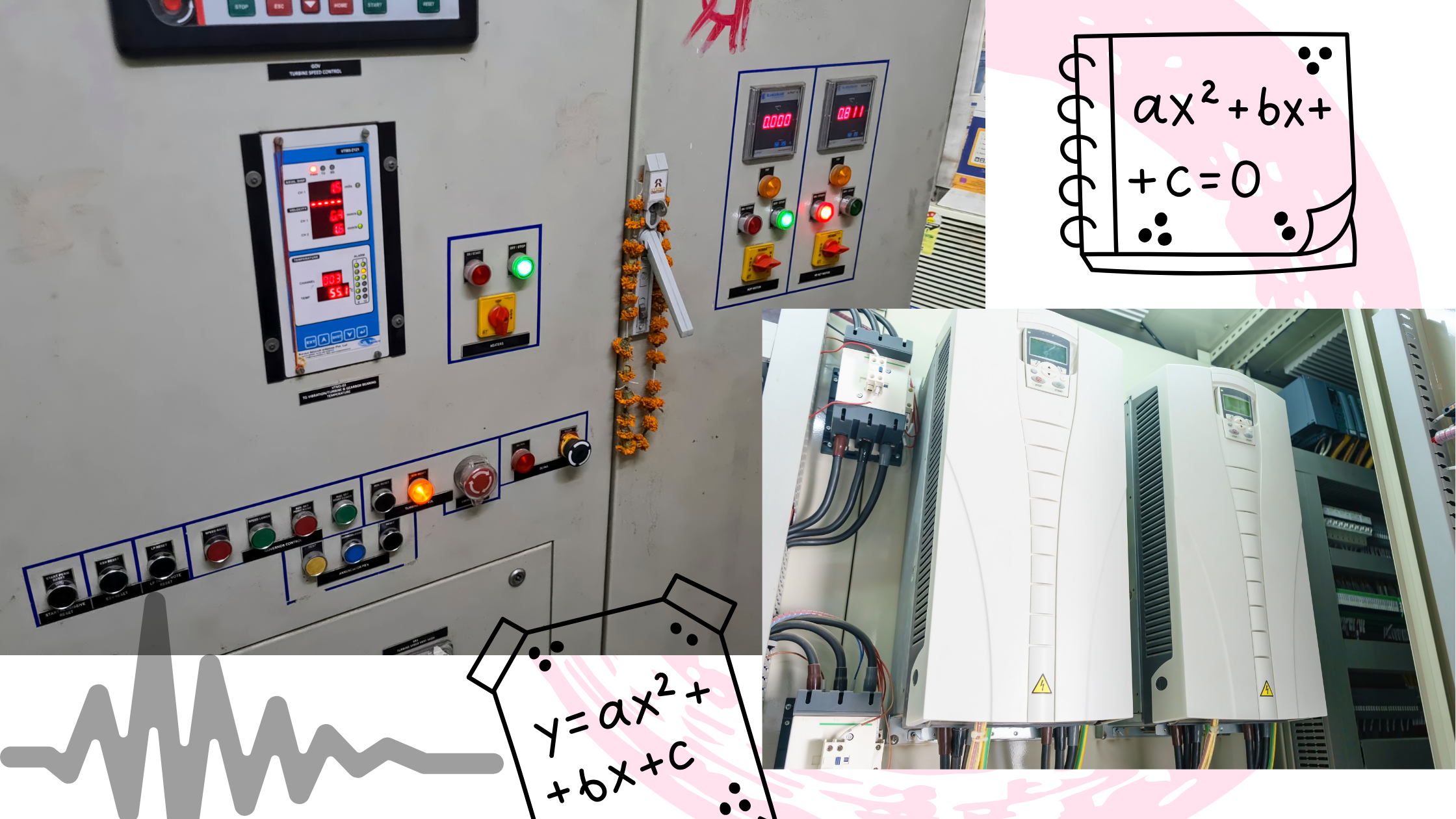
Why Every Electrical Engineer Should Learn VFD Before Graduation
Walk into any modern factory and you’ll notice something interesting.
Conveyors are moving at controlled speeds.
Pumps adjust their flow automatically.
Fans speed up and slow down depending on demand.
Production lines run efficiently without wasting energy.
Behind many of these systems is a technology called the Variable Frequency Drive (VFD).
Yet many Electrical and Electronics Engineering students graduate without ever understanding how a VFD works.
That is a mistake.
If you are planning a career in Industrial Automation, Maintenance, Manufacturing, PLC Programming, or Electrical Engineering, learning VFD technology can give you a significant advantage.
What Is a VFD?
VFD stands for Variable Frequency Drive.
It is an electronic device used to control the speed of an AC motor.
Instead of running a motor at one fixed speed, a VFD allows engineers to:
- Increase speed
- Reduce speed
- Control acceleration
- Control deceleration
- Improve process efficiency
Industrial automation systems commonly use VFDs to control AC motor speed and improve energy efficiency. [cadcamguru.com]
Why Are VFDs Everywhere?
Think about how many motors operate inside a factory:
- Conveyors
- Pumps
- Compressors
- Cooling towers
- Packaging machines
- Fans
- Material handling systems
Most of these applications do not need motors to run at full speed all the time.
VFDs allow industries to operate motors only at the speed required for the process.
This improves:
- Productivity
- Process control
- Equipment life
- Energy efficiency
The Biggest Problem with Traditional Motor Control
Traditionally, motors were operated using:
- Direct-On-Line (DOL) starters
- Star-Delta starters
- Contactors and relays
These systems could start and stop motors, but they had limited speed control.
For example:
A conveyor may need to run at:
- 30% speed
- 50% speed
- 75% speed
- 100% speed
A traditional starter cannot easily provide this flexibility.
A VFD can.
This is one reason why VFDs have become standard in modern automation systems. [cadcamguru.com]
Why Industries Love VFDs
1. Energy Savings
One of the biggest benefits of a VFD is reduced energy consumption.
When motors run only as fast as necessary, power usage decreases significantly.
According to CADCAMGURU’s Industrial Automation overview, VFDs help achieve energy savings by operating motors at optimum speeds instead of relying solely on flow control methods. [cadcamguru.com]
2. Better Process Control
Industries need accurate speed control.
Examples:
- Conveyor systems
- Bottling plants
- Packaging lines
- Textile machinery
VFDs allow precise adjustment of motor speed.
3. Reduced Mechanical Stress
Sudden motor starts can damage:
- Belts
- Gears
- Bearings
- Shafts
VFDs provide smooth acceleration and deceleration.
This extends equipment life.
4. Improved Automation
Modern PLC systems frequently communicate with VFDs to automate industrial processes. PLC-VFD integration is commonly used in conveyor and production applications. [cadcamguru.com], [cadcamguru.com]
VFD and PLC: The Perfect Combination
Many students learn PLC programming but don’t understand how PLCs interact with drives.
In real factories:
- PLC makes decisions.
- VFD controls motor speed.
- HMI displays system status.
- SCADA monitors operations.
For example:
A PLC may detect an increase in production demand.
The PLC then sends a signal to the VFD.
The VFD increases motor speed automatically.
The operator sees the updated information on the HMI.
This is how modern automation systems work.
Common Industries That Use VFDs
Learning VFD technology creates opportunities across various industries.
Manufacturing
- Assembly lines
- Packaging systems
- Material handling equipment
Automotive
- Conveyor systems
- Robotic production lines
- Paint shops
Water Treatment
- Pump control
- Flow control systems
Food Processing
- Mixers
- Blowers
- Conveyor systems
Pharmaceutical Industry
- Process equipment
- Automated production systems
Wherever motors are used, there is a strong chance that VFDs are involved.
Common Interview Questions About VFDs
Many automation and electrical engineering interviews include questions such as:
- What is a VFD?
- Why is a VFD used?
- What is the difference between a starter and a VFD?
- How does a PLC communicate with a VFD?
- What are the benefits of variable speed control?
- Why do industries use VFDs for energy saving?
Students who understand VFD concepts often perform better in automation interviews.
Skills You Should Learn Along with VFD
Learning VFDs becomes even more powerful when combined with:
- PLC Programming
- SCADA
- HMI Development
- Control Panel Design
- Electrical Drawings
- Sensors and Actuators
- Troubleshooting
Together, these skills form the foundation of Industrial Automation.
Why Freshers Should Learn VFD Before Graduation
Most students wait until they get a job to learn motor drives.
But learning VFD technology during college offers several advantages:
- Better understanding of industrial systems
- Improved interview performance
- Stronger practical knowledge
- Better automation project opportunities
- Higher confidence during plant visits
Most importantly, it helps bridge the gap between academic learning and industrial requirements.
Career Opportunities After Learning VFD
Knowledge of VFDs can support careers such as:
- Automation Engineer
- PLC Programmer
- Commissioning Engineer
- Maintenance Engineer
- Service Engineer
- Electrical Design Engineer
- Industrial Automation Engineer
These roles are commonly found in manufacturing, automotive, power, water treatment, and process industries.
Ready to Build Industry-Relevant Automation Skills?
Every electrical engineer learns motors.
But modern industries expect engineers to understand how motors are controlled.
That is exactly where VFD technology comes in.
If you want to work in Industrial Automation, learning PLC programming alone is not enough. Understanding VFDs, control panels, HMI systems, and industrial troubleshooting can make you far more valuable to employers.
The best time to learn these skills is before graduation, not after.
Start Your Industrial Automation Career with CADCAMGURU
At CADCAMGURU, students receive practical training in:
- PLC Programming
- VFD Programming
- HMI Development
- SCADA
- Control Panel Design
- Industrial Automation Projects
👉 Apply for Industrial Automation Courses
Explore more:
- Industrial Automation Programs
- PLC + SCADA Project Guide [cadcamguru.com]
- Automation Engineer Career Guide [cadcamguru.com]
Contact Us
📞 +91 9168603427 / +91 9168601733
📧 enquiry@cadcamguru.com
