
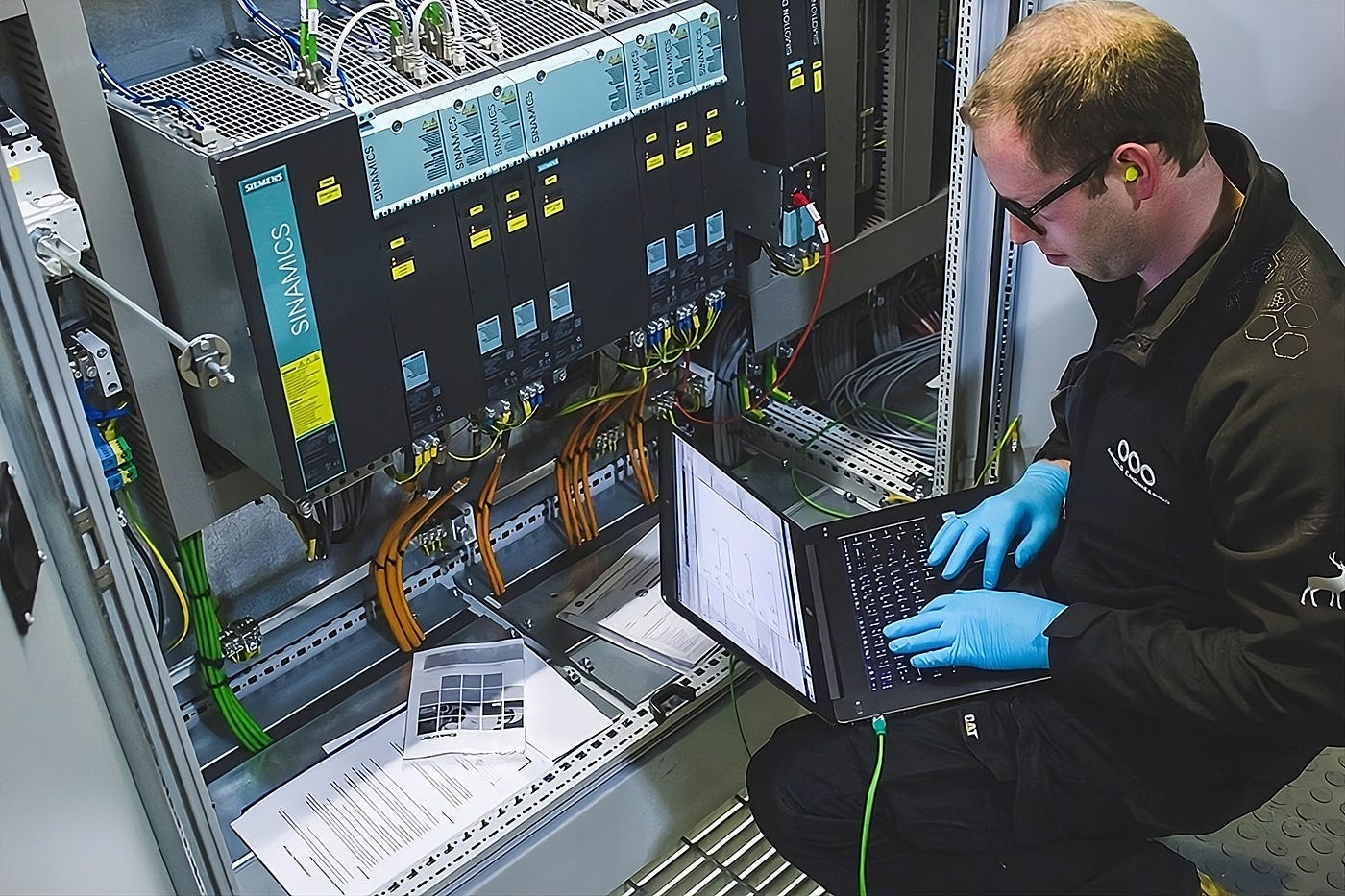
Today’s industries are becoming smarter with Industrial Automation, PLC, SCADA, HMI, VFD, IoT, and Robotics. Companies are actively looking for engineers who not only understand theory but also have practical certification in Automation.
If you want a stable, high-growth, and future-ready career, becoming an Automation Certified Engineer can be one of the best decisions.
Let’s understand why.
What is an Automation Certified Engineer?
An Automation Certified Engineer is trained to design, program, and maintain automated systems used in manufacturing industries.
They work with technologies such as:
- PLC Programming (Siemens PLC, Allen Bradley PLC, Delta PLC, Fuji PLC)
- SCADA for monitoring industrial processes
- HMI for machine interface design
- VFD for motor speed control
- Sensors & Industrial Instrumentation
- Industrial Communication Protocols
- IoT and Smart Manufacturing (Industry 4.0)
These skills help industries improve productivity, quality, and safety.
Why Automation Certification is Important
Many engineering students graduate with theoretical knowledge but lack practical exposure. Certification helps you gain hands-on skills that industries expect.
Key Benefits of Certification
- Improves job opportunities
- Builds confidence in practical work
- Makes your resume stronger
- Helps you stand out in interviews
- Prepares you for Industry 4.0 technologies
Companies prefer certified candidates because they can start working faster.
Career Opportunities After Automation Certification
Popular job roles include:
| Job Role | Key Responsibility |
|---|---|
| PLC Programmer | Develop control logic for machines |
| Automation Engineer | Design automated systems |
| SCADA Engineer | Monitor plant operations |
| Maintenance Engineer | Troubleshoot industrial machines |
| Industrial IoT Engineer | Connect machines with smart systems |
Industries hiring automation engineers:
- Automotive manufacturing
- Pharmaceutical industries
- Food processing plants
- FMCG production
- Packaging industries
- Smart factories
Skills You Should Focus On
To become job-ready, students should learn:
- Ladder Logic Programming
- PLC Wiring & Programming
- SCADA Software
- HMI Design
- Sensors & Actuators
- Pneumatics basics
- Industrial Networking
- Basics of Arduino & Raspberry Pi for IoT
These skills are highly searched by employers.
Why This Career is Ideal for Electrical & Electronics Students
Students from Electrical, Electronics, E&TC, and Instrumentation engineering can easily transition into automation because many concepts are already part of the syllabus.
Automation careers offer:
- Growing demand in India
- Opportunities in Maharashtra industrial zones
- Good salary growth
- Job stability
- Opportunity to work with latest technology
How CADCAMGURU Helps You Become Industry Ready
CADCAMGURU ACE Courses focus on practical training in:
- Siemens PLC Programming
- Allen Bradley PLC Programming
- Delta PLC
- SCADA & HMI
- VFD Drives
- Industrial communication
- Real-time project practice
Students get career guidance aligned with industry requirements, helping them confidently enter automation careers.
