
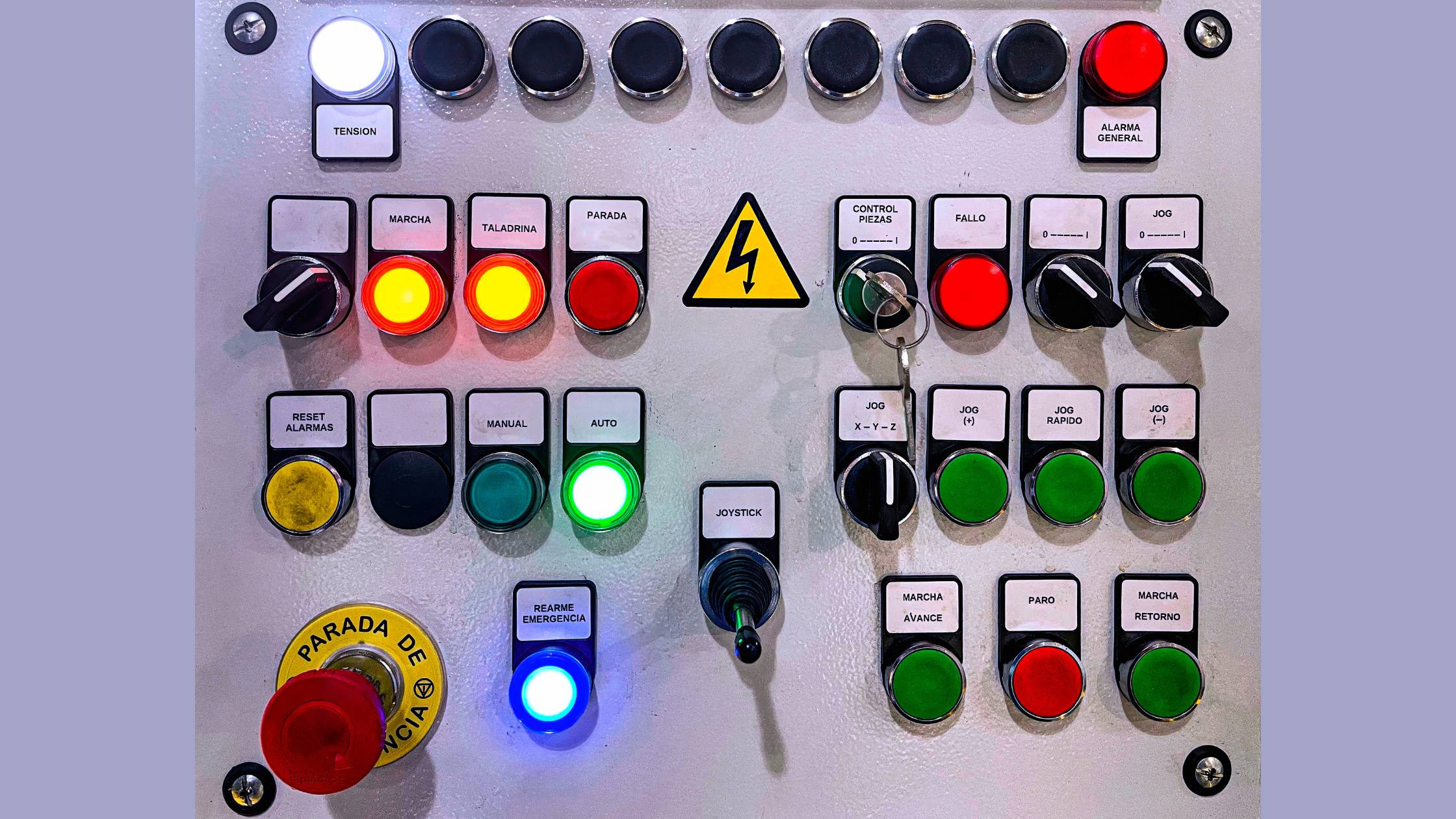
9 Out of 10 Electrical Engineers Can’t Read a Control Panel Properly
An Electrical Engineer walks into a factory.
A machine suddenly stops.
The PLC is running.
The motor is healthy.
The HMI shows no major error.
The maintenance engineer opens the control panel and starts checking the wiring, relays, contactors, terminal blocks, MCBs, VFD connections, and PLC I/O points.
Many fresh engineers are surprised at this moment.
They have learned PLC programming.
They know ladder logic.
They have completed automation courses.
But they cannot confidently understand the machine’s control panel.
The reality is simple:
Many engineering students focus on software but very few learn how a real industrial control panel works.
Why Control Panels Are the Heart of Industrial Automation
Every automated machine has a brain and a nervous system.
The PLC acts as the brain.
The control panel connects everything together.
Inside a control panel, you will typically find:
- PLC
- MCBs
- Contactors
- Relays
- Terminal Blocks
- Power Supplies
- VFDs
- Safety Devices
- Communication Modules
These components work together to control industrial machines. PLCs, HMI, SCADA, and VFDs are core elements of modern automation systems. [cadcamguru.com]
Without understanding the control panel, troubleshooting becomes difficult.
Knowing PLC Programming Is Not Enough
Many students believe:
“If I learn PLC programming, I can become an Automation Engineer.”
PLC programming is important.
However, industrial automation involves much more than ladder logic.
A complete automation engineer should understand:
- Electrical drawings
- Panel layout
- Wiring standards
- Motor starters
- PLC inputs and outputs
- VFD connections
- Safety circuits
- Communication wiring
Industries use PLCs extensively in conveyors, process control, machine automation, and building automation applications. [cadcamguru.com]
That means engineers are expected to understand the complete system, not just the PLC software.
Can You Identify These Components?
Imagine opening an industrial panel.
Can you identify:
- Main incomer
- Control transformer
- Power supply
- PLC CPU
- Digital input module
- Digital output module
- Relay cards
- VFD
- Terminal strip
Many fresh graduates cannot.
This creates a gap between classroom learning and factory requirements.
Why Industry Values Control Panel Knowledge
Automation engineers do not spend their entire day writing PLC programs.
Their responsibilities often include:
- Machine commissioning
- Fault finding
- Maintenance support
- System upgrades
- Panel inspections
- Electrical modifications
When a machine stops unexpectedly, companies need engineers who can quickly understand the control circuit and identify the problem.
This is one reason why employers highly value practical control panel knowledge.
The Most Common Mistakes Fresh Engineers Make
1. Ignoring Electrical Drawings
Many students focus only on software.
However, understanding:
- Power diagrams
- Control circuits
- PLC wiring diagrams
is equally important.
2. Never Opening a Real Control Panel
Some students complete an entire engineering degree without inspecting an industrial panel.
As a result, they struggle to relate software concepts to actual machinery.
3. Memorizing PLC Commands
Learning instructions is useful.
Understanding how those instructions control motors, sensors, solenoid valves, and actuators is far more important.
4. Avoiding Troubleshooting Practice
Troubleshooting is one of the most valuable skills in automation.
Companies often hire engineers who can solve faults faster, not just write programs.
What Happens Inside a Control Panel?
Let’s look at a simple example.
A conveyor motor needs to start.
The process may involve:
- Sensor detects a product.
- PLC receives the signal.
- PLC executes ladder logic.
- Output signal is activated.
- Relay energizes.
- Contactor operates.
- Motor starts through a VFD or starter.
- Status appears on the HMI.
HMI systems provide operators with real-time machine status, alarms, motor information, and process data. [cadcamguru.com]
Understanding this complete chain is essential for automation engineers.
Why Control Panel Design Is a Valuable Skill
Engineers who understand panel design can:
- Read electrical drawings faster
- Troubleshoot faults efficiently
- Communicate with maintenance teams
- Support machine installation
- Improve system reliability
These abilities make them more useful on the shop floor.
Skills Every Automation Engineer Should Learn
If you want a long-term career in Industrial Automation, focus on:
- PLC Programming
- SCADA Development
- HMI Design
- Control Panel Design
- Electrical Drawings
- VFD Programming
- Industrial Instrumentation
- Sensors and Actuators
- Troubleshooting
- Communication Protocols
Automation projects commonly combine PLC, SCADA, HMI, sensors, and drives to control and monitor industrial systems. [cadcamguru.com], [cadcamguru.com]
Career Opportunities After Learning Control Panel Design
Strong panel knowledge opens opportunities such as:
- Automation Engineer
- PLC Programmer
- Control Panel Design Engineer
- Electrical Design Engineer
- Commissioning Engineer
- Maintenance Engineer
- Service Engineer
- SCADA Engineer
These roles are in demand across:
- Automotive Industries
- Manufacturing Plants
- Water Treatment Projects
- Pharmaceutical Industries
- Power Plants
- Packaging Industries
What Recruiters Often Ask During Interviews
Interviewers may ask questions such as:
- What is the difference between a relay and a contactor?
- Why do we use a control transformer?
- How does a VFD work?
- What is a PLC input module?
- How do you troubleshoot a motor that is not starting?
- Can you read a control panel electrical drawing?
Students who have seen actual panels can answer these questions much more confidently.
How to Build This Skill
Start simple.
Visit laboratories, factories, or training centers and observe:
- PLC Panels
- MCC Panels
- VFD Panels
- Machine Control Panels
Don’t just look at the PLC.
Try to understand how every component works together.
The goal is to see industrial automation as an entire system.
Ready to Become an Industry-Ready Automation Engineer?
Learning PLC programming is a great start.
But automation engineers who understand control panels, electrical drawings, troubleshooting, and machine operation are far more valuable in industry.
The next time you see an industrial control panel, don’t view it as a box full of wires.
View it as the place where electrical engineering, automation, and real-world problem-solving come together.
Start Your Industrial Automation Career with CADCAMGURU
At CADCAMGURU, students learn:
- PLC Programming
- SCADA
- HMI
- VFD
- Control Panel Design
- Industrial Troubleshooting
- Real Automation Projects
👉 Apply for Industrial Automation Courses
New batches are starting soon. Early enrollment gives students more time for practical training and project work.
Contact Us
📞 +91 9168603427 / +91 9168601733
📧 enquiry@cadcamguru.com
