
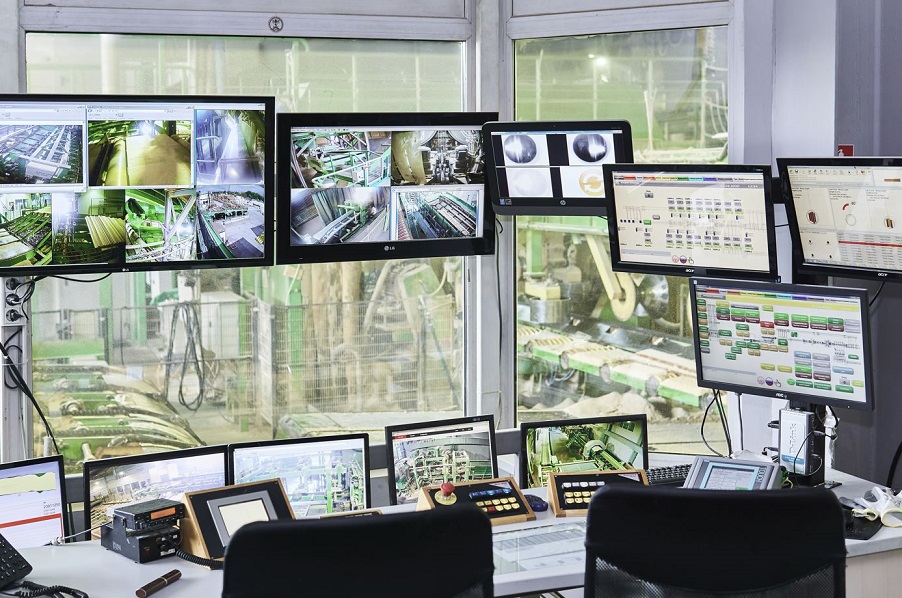
If you are an Automation student, you have probably heard the term SCADA in class or during industrial visits. But what exactly is SCADA? Why is it important in Industrial Automation? And how can it help your career?
Let us understand SCADA in simple words.
SCADA stands for Supervisory Control and Data Acquisition.
In simple terms, SCADA is a system that helps industries:
-
Monitor machines and processes
-
Collect real time data
-
Control equipment from a central location
-
Detect faults quickly
It is widely used in industries like power plants, water treatment, manufacturing, oil and gas, and smart factories.
How SCADA Works in Industrial Automation
SCADA does not work alone. It works with other automation components like:
-
PLC such as Siemens PLC
-
HMI panels
-
Sensors and actuators
-
Communication protocols
Basic Working Flow:
-
Sensors collect data from machines
-
PLC processes the data using ladder logic
-
SCADA displays the data on a computer screen
-
Operator monitors and controls the system
This makes SCADA an important part of Industry 4.0 and smart manufacturing.
Why SCADA is Important for Mechanical Students
Many Mechanical students think SCADA is only for Electrical or Electronics students. That is not true.
In modern factories:
-
Mechanical systems are automated
-
Production lines are monitored using SCADA
-
Maintenance teams use SCADA data for troubleshooting
If you want to work in:
-
Manufacturing plants
-
Automobile industries
-
Process industries
-
Automation companies
Then understanding SCADA gives you a strong career advantage.
Skills You Should Learn Along with SCADA
To build a career in Industrial Automation, focus on these skills:
| Skill | Why It Is Important |
|---|---|
| PLC Programming | Core control of machines |
| Ladder Logic | Basic programming language of PLC |
| HMI Design | Operator interface design |
| Communication Protocols | Connecting PLC and SCADA |
| Basic Electrical Knowledge | Understanding panels and wiring |
Learning platforms like CADCAMGURU ACE Courses help students gain practical training on PLC, SCADA, VFD, and Industrial Automation systems. Practical knowledge always gives you an edge in interviews.
Career Opportunities After Learning SCADA
Once you learn SCADA, you can apply for roles like:
-
PLC SCADA Engineer
-
Automation Engineer
-
Maintenance Engineer
-
Control Panel Engineer
-
Service Engineer
Average Starting Salary in India
Freshers in Industrial Automation can expect:
-
₹1.8 to ₹3.5 LPA in small and mid companies
-
Higher packages with strong practical skills
In cities like Pune, Mumbai, and Nashik, automation jobs are growing fast due to industrial development.
Final Advice for Students
If you are serious about a career in Industrial Automation:
-
Do not focus only on theory
-
Practice real PLC and SCADA software
-
Work on small automation projects
-
Build confidence in troubleshooting
SCADA is not difficult. It becomes easy when you learn it step by step with practical exposure.
