
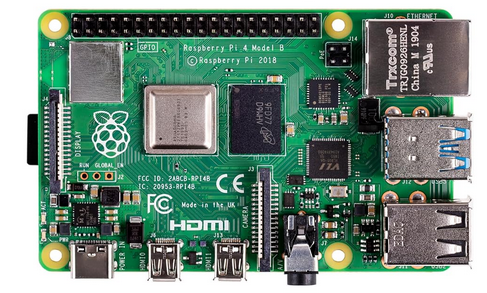
If you are an Electrical or Electronics Engineering student, you have probably heard about Raspberry Pi. Many students think it is only for hobby projects. But the truth is, Raspberry Pi is now widely used in Industrial Automation, IoT, and smart manufacturing.
The best part? You can start learning it during college itself.
Let us understand how Raspberry Pi is used in real industries and how it can help you build a strong automation career.
What is Raspberry Pi?
Raspberry Pi is a small, low cost computer that can control sensors, motors, relays, and industrial devices. It supports programming languages like Python and can communicate using common Communication Protocols like Modbus, MQTT, and Ethernet.
In automation, it is often used for:
-
Data collection
-
Monitoring systems
-
IoT applications
-
Small scale control systems
7 Real-World Applications of Raspberry Pi in Industrial Automation
1. Industrial Data Monitoring System
Raspberry Pi can collect data from temperature, pressure, or humidity sensors.
Example:
In a manufacturing plant, it can monitor machine temperature and send alerts if it crosses a limit.
This is similar to how SCADA systems monitor large industries.
2. Mini PLC Based Control System
Siemens PLC and Allen Bradley PLC are commonly used in big industries.
But for small projects and training labs, Raspberry Pi can act like a mini PLC.
Students can:
-
Control motors
-
Operate relays
-
Design basic automation logic
-
Simulate Ladder Logic concepts
This helps you understand PLC programming in a practical way.
3. IoT Based Smart Factory Projects
Industry 4.0 is all about smart factories and connected machines.
Raspberry Pi can:
-
Send machine data to cloud
-
Display live dashboards
-
Track production count
-
Monitor energy usage
Many companies now look for engineers who understand IoT with Industrial Automation.
4. HMI Dashboard Development
Raspberry Pi can create simple HMI screens using web based dashboards.
You can design:
-
Start and Stop buttons
-
Alarm indicators
-
Production counters
-
Real time graphs
This is very useful if you want to learn SCADA and HMI systems.
5. VFD and Motor Speed Monitoring
In industries, VFD is used to control motor speed.
Raspberry Pi can:
-
Monitor motor RPM
-
Log speed data
-
Display fault messages
-
Send alerts to maintenance team
This is a practical way to understand motor control systems.
6. Remote Machine Access System
Imagine a factory manager checking machine status from home.
Using Raspberry Pi with IoT:
-
Machine data can be accessed remotely
-
Fault alerts can be sent on mobile
-
Maintenance planning becomes easier
This is already happening in many modern factories.
7. Automation Training and Prototyping
For students in Maharashtra and across India, Raspberry Pi is a powerful learning tool.
Instead of only studying theory of PLC, SCADA, and HMI, you can:
-
Build real working models
-
Understand wiring concepts
-
Learn troubleshooting
-
Improve programming skills
This makes your resume stronger during campus placements.
Why Students Should Learn Raspberry Pi with PLC and Automation
Today companies expect more than just a degree. They look for practical skills like:
-
PLC Programming
-
SCADA Development
-
Communication Protocols
-
IoT Integration
-
Panel Design Basics
When you combine Raspberry Pi with Industrial Automation training, you become industry ready.
At CADCAMGURU ACE Courses, students learn PLC, SCADA, HMI, VFD, and real time automation projects. Raspberry Pi based projects are a great starting point before handling industrial PLCs like Siemens, Delta, or Allen Bradley.
Career Opportunities After Learning Raspberry Pi and Automation
If you develop these skills, you can apply for roles like:
-
Automation Engineer
-
PLC Programmer
-
Maintenance Engineer
-
SCADA Engineer
-
IoT Engineer
In Maharashtra, especially in cities like Pune, Nashik, and Mumbai, automation jobs are growing fast in manufacturing industries.
